
Geopolitics
What After NATO?
No matter how it ends, the Iran War has buried one world order and will give rise to another
By Amotz Asa-El
“I URGE you to comply,” wrote Dwight Eisenhower to David Ben-Gurion, diplomatese for what in Donald Trump’s phrasing would have been something like “do as I say or I’ll strip you nude and have you tarred and feathered.”
It was November 1956, and the American president was ordering the Jewish state to withdraw from the Sinai Desert following the previous month’s Sinai Campaign. That the war pitted a dictatorial aggressor against an embattled democracy was immaterial. What mattered was the Soviet-American world order, which the war unsettled.
Eisenhower thus forced an Israeli withdrawal, and also stood by while Moscow massacred the Hungarian rebels who, in those very days, rose up in arms demanding democracy and declaring their intention to have their country join NATO, and thus defect from East to West.
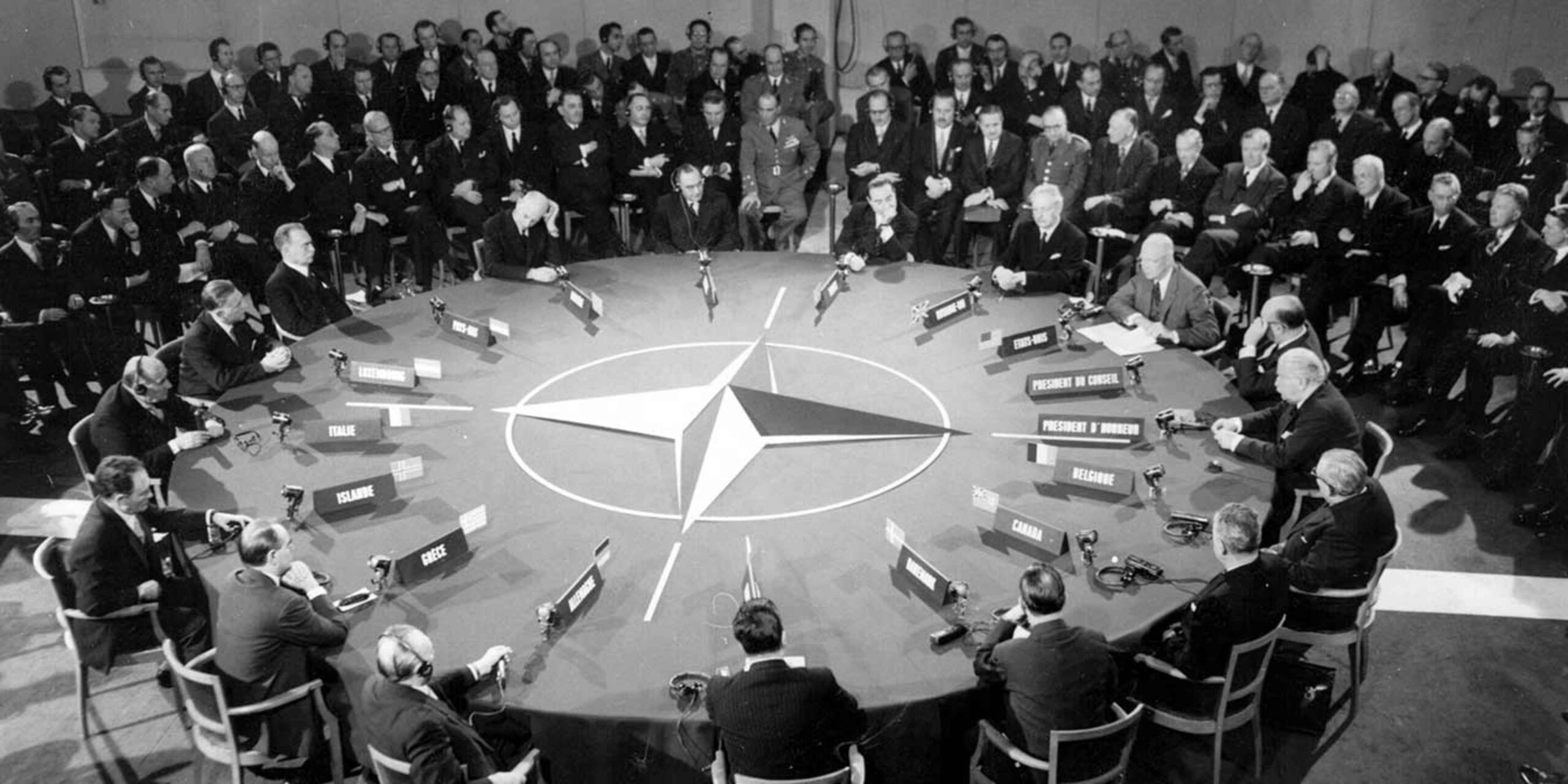
Israel was marginal in that global configuration, and that is how it was treated at a time when America imposed itself even on Britian and France, which had fought alongside the IDF during the Sinai Campaign. It was all part of the postwar order that was consolidated with NATO’s establishment, 77 years ago this month, and in fact extended much further, having effectively included non-NATO members like Australia and Japan.
Now the Western alliance, the fears that produced it, and the international reality it shaped – are all things of the past. It is one historic transformation that the Iran War, no matter how it ends, has already exposed.
What, then, was this alliance about and what should come in its place?
WE have come a long way since Eisenhower’s patronizing treatment of Ben-Gurion.
American-Israeli cooperation in fighting Iran is not only unambiguous and open, but also intimate and intense. As New York Times columnist Bret Stephens noted, this may be the first time since 1945 that that the US has “an equal partner with which to share the burdens of war.”
In fact, the American-Israeli symbiosis has demonstrated what the concept of alliance is all about: a joint struggle for a shared cause. And the cause is the same one that guided the Western alliance since its inception: a free world and a secure West.
Yes, allies don’t always actively join each other’s wars, but at the very least they lend each other moral support. And in the current war’s case, the Western cause should have been a no-brainer: a regime that massacred its own people, vowed to destroy another country, deployed terrorists worldwide, and openly piled uranium, missiles, rockets and drones.
But alas, the allies refused to share the cause. In London Prime Minister Keir Starmer rejected an American request to join the war, in Berlin Defense Minister Boris Pistorius said “this is not our war,” and in Madrid Prime Minister Pedro Sanchez called the war “Illegal.”
Worse, Washington’s ostensible allies would not even help it reopen the Hormuz Straits, a cause which is not about interference in another country’s internal affairs, but about defending the West itself from a hijacker that took an economic hostage and pointed a pistol to its head.
What, then, happened to the alliance that once defined the free world?
HISTORIANS will debate the cause of the Western alliance’s collapse. Some will blame it on American idiocy and others on European exploitation, some will stress the role of personalities, others the role of historic events. They will all be right.
Telling a major ally like Britain that its troops are cowards and its warships are “toys,” as Donald Trump did, or saying of the president of France “his wife treats him very badly” is no way to treat allies, not to mention the attempt to snatch Greenland from Denmark, or the suggestion that Canada should be gobbled by Uncle Sam.
Then again, America’s allies spent but a fraction of what the US spent over the decades on the alliance’s defense. Even today, after European governments raised their defense spending following Russia’s invasion of Ukraine, US defense spending is 3.1 percent of GDP, whereas Britian, France, and Germany still spend under 2.5 percent, and Spain and Italy under 2 percent.
But the real problem lies not in such accounting and also not in Trump’s rhetoric, but in the passing of an era – the era that produced the Western alliance. What glued that alliance – the Soviet war machine’s menace and the communist idea’s appeal – are gone.
As long as the West faced one aggressive and imperial enemy, Washington readily spent much more than its allies on confronting it, and the allies mostly accepted its lead. Now European leaders don’t feel that Khomeinist Iran is Europe’s enemy, and Trump doesn’t feel that Europe’s new enemy – Vladimir Putin’s Russia – is America’s enemy.
The Western alliance, in short, has lost its compass, driver, and fuel. And since this alliance is brain dead, a new one will have to come in its place.
THE new alliance will not be assembled by the current American leader. This project will take the kind of conviction, vision, inspiration and focus he does not possess. But the new alliance will nonetheless emerge. It will include all those who believe in, and are prepared to fight for, liberty, tolerance and free trade. And it will have two tiers: one political, the other economic.
The political alliance will confront those out to subdue mankind, the way communist leaders did in the past and Islamist radicals do today. Many won’t join it, whether out of cynicism or cowardice, but the alliance’s other tier will include every county that uses the high seas.
No, these allies will not make budgetary pledges, much less station troops in each other’s realms. They will, however, jointly declare: Freedom of navigation is sacred. Anyone obstructing it declares war on the rest of mankind, and becomes its fair game.
Jerusalem Post 10 April 2026