
Mideast
Will Piracy Work?
Iran’s seizure of Hormuz will fail because it's a messianic provocation of the rest of mankind
By Amotz Asa-El
Piracy, you want to believe, has always been loathsome, and also a recipe for defeat.
It wasn’t. In ancient times looting ships was a perfectly legitimate profession, and in later times it was even a source of great honor. Queen Elizabeth I, for instance, knighted Sir Francis Drake for having raided Spain’s distant colonies and robbed its merchant ships.
Worse, that glorified pirate’s exploits were actually engines of his country’s journey to imperium, underscored by his role in the British Navy’s defeat in 1588 of the Spanish Armada as it prepared to storm England’s shores.
Similarly, North African pirates’ raids on American ships made George Washaington and his successor, John Adams, pay millions of dollars to the sultanates of Tripoli, Tunis, Morocco, and Algiers.
Unfortunately, then, there is reason to suspect the Iranian seizure of the Hormuz Straits will reward its culprits the way piracy rewarded others before them. Fortunately, it won’t.
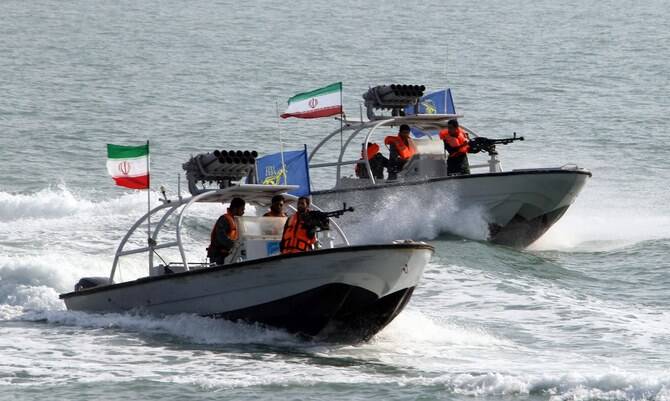
YES, the Iranian move is textbook piracy. Pirates molest blameless ships and wrest treasures which are other people’s toil. The Iranians, by trapping 500 ships and 6,000 sailors while demanding cash for passage in waters that aren’t theirs, and for services no one requested – are doing just that.
If indeed they are inspired by what happened opposite North Africa to the young US, the Iranians should be cautioned that ultimately, in the days of Thomas Jefferson, the US sent battle the Mediterranean battleships that ended the piratic raids of American ships.
In fact, those pirates’ failure ran much deeper. Deployed by regimes that broke away from the Ottoman Empire, they were part of an effort to use robbery as a substitute for economic development. Their American targets were the opposite of that, a young nation that idealized work and excelled at it. The piratic regimes could sting that emerging civilization, but were no match for its economic force.
This is what is now at play in the Persian Gulf, where Iran might register some tactical gains, but will ultimately face strategic defeat.
THE Iranian blockade should not have come as a surprise.
As New York Times correspondent Michael Crowley’s investigation reported, a prospective Iranian closure of the straits was repeatedly considered in Pentagon war games over the years (The New York Times, 2 June 2026).
Yes, Donald Trump’s erratic conduct in the face of the Iranian move suggests he personally was caught off guard. Hence his continuous zigzagging between attacks, negotiations, and verbal shots from hip. Only time will tell what this behavior is all about: ignorance, frivolity, sheer idiocy, or, conversely, stratagem, decoy, and counter-surprise.
Yet whatever Trump’s plans and actions, the Iranian ploy cannot last, much less succeed.
Economically, the straits’ role as a waystation between oil producers and consumers is not irreplaceable. Oil pipes can lead Arab crude to Asia via Saudi ports, and to Europe via Mediterranean ports. It will take but several years to build such pipes.
Energetic blackmail has backfired in the past, and will backfire in the future. The 1970’s Arab oil embargo initially quadrupled oil prices, but then led West producers to find new oil fields, and Western consumers to slash energy consumption. By the 1980s the oil crunch became an oil glut, with prices plunging at one point to hardly $10 per barrel.
Set aside, then, the criminality of Tehran’s ostensibly brilliant seizure of international waters, and its attempt to blackmail the rest of the world. From the viewpoint of the Iranian people’s economic future, this move is a shot in the foot.
Iran’s blockade of Hormuz is even more reckless militarily. Breaking the American navy’s counter blockade is beyond the mullahs’ naval means. This means that in addition to the long-term damage their piracy will inflict on their economy, they are squeezing most Iranians’ already decimated incomes and paltry meals.
Finally, politically, Iran’s piracy will win it the enmity of all its victims, first and foremost its Arab neighbors.
YES, as of now the Arab world is surrendering to its Muslim rival’s bullying. Represented in this by Oman, Arab governments are seemingly accepting Tehran’s suggestion to charge, jointly with Muskat, passage fees through Hormuz.
In fact, Iran’s assault on its Arab neighbors – including, most spectacularly, last month’s attack on a gas tanker 100 miles north of Cairo – will be recalled for generations. Arabs know better than all others that Iran’s piracy is part of the Islamic Republic’s imperialism, as are the militias it planted in a horst of Arab countries.
Suspicion between the Arabs and the Persians harks back centuries. What fed the Sunni-Shiite rift during the seventh century CE later returned when the Iranian Shah wrested from Iraq its side of the Shat-el-Arab River, to which Iraq later responded with Saddam Hussein’s invasion, and eight-year war. Now Iran attacked not one, but eight Arab countries, with rockets, missiles and drones. In due course, they will respond.
As for the non-Arab world, some of its countries will ultimately realize that Tehran has become a global troublemaker that is bad for their business. Some will get it sooner and others later, but at some point they will have to wonder: if Iran can do highway robbery in Hormuz, why won’t, say, Madagascar try a similar number in the Channel of Mozambique, or Morocco in Gibraltar?
Unlike what some now say, there is no genius, or even just wisdom, in Iran’s seizure of Hormuz. It’s an act of desperation that only messianic fanatics could devise, and only ignorant adventurers can order; the beginning of the end of the ayatollahs’ quest to impose theocracy on Iran, Shia on all Muslims, and Iran on an unsuspecting world. They already lost the Iranians, they certainly won’t get the Muslims, let alone the rest of the world, or even just Hormuz.
Jerusalem Post 14 August 2026