
Election '26
Who Won?
Netanyahu and Eisenkot both lost, but with ultra-Orthodoxy sidelined and Arab voters engaged – Israel has won
By Amotz Asa-El
THE people have spoken. The parliamentary fog id thick, but several facts – personal, moral, and social – are clear, and harsh.
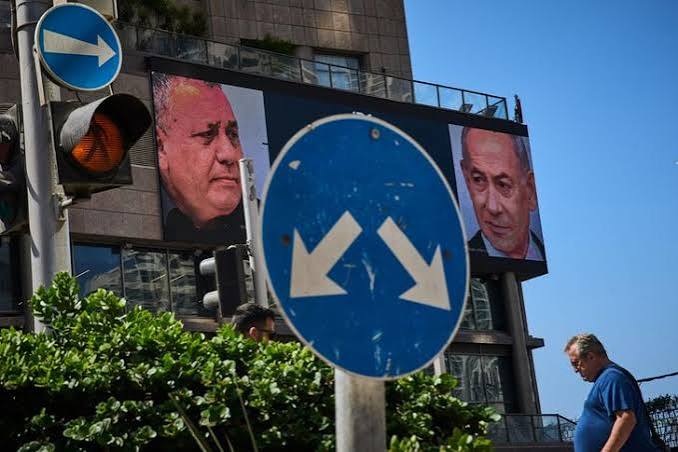
The personal truth is that Gadi Eisenkot and Benjamin Netanyahu both lost. Eisenkot, as argued here last week, displayed no vision, articulated no idea, and presented no plan other than to replace a failed government. That’s not how you win an election.
That Eisenkot is not charismatic is perfectly fine, and after the Netanyahu era this flaw is even welcome. But it’s no excuse for failing to say anything about our overcrowded hospitals, substandard schools, rampant crime, municipal corruption and traffic congestion, to mention but a few of the crises that frustrate millions of citizens every day.
That is how the opposition blew it, despite having had all the reason in the world to win by a landslide. Having said this, Eisenkot’s failure pales compared with Netanyahu’s.
THE man who thought he would turn this country into a one-man show – has been dealt an emphatic vote of no confidence.
Likud has lost 15 percent of its voters, and the ruling coalition’s total following has shrunk by more than one fifth. Moreover, among the Zionist electorate, namely, voters who do military or national service, Netanyahu was defeated 55:45.
The working assumption among Likud’s voters, that Netanyahu is their biggest asset, has proven unfounded. He was their liability, and will remain such as long as they don’t replace him. Otherwise, the swing vote that Netanyahu ignored, provoked, and lost, will grow even larger.
And the reason the swing vote abandoned the ruling party and its leader is their moral record. It began with the judicial coup that Netanyahu tried to launch back in January 2023.
Netanyahu’s plan, to have the government select the Supreme Court justices, limit the judiciary’s oversight of government decisions, restrict the grounds for Supreme Court rulings, and dilute the powers of the attorney general and the rest of the government’s legal advisors – has now been buried for good.
Having ignored the need to pass such constitutional reforms through a broad consensus, Netanyahu tore Israeli society apart only to see multitudes take to the streets and force him to stage a retreat. Even so, Netanyahu and his party hoped to return to this plan, had they won. But they did not win.
The swing vote, it turned out, did not like the sight of a prime minister defaming our judges and laying siege to their courts. Yes, the critical mass of diehard Likudniks and far-Right zealots – one in three voters – fully backed Netanyahu’s urge to conquer the judiciary. The swing vote, however, did not share this hope, and was particularly appalled by the Likud’s barbarian assault on the Supreme Court and its president.
Even worse, both morally and electorally, was Netanyahu’s flight from responsibility.
THE trauma of October 7 predominated millions of citizens’ thoughts at they made their electoral choices. Recalling what they endured, voters were disgusted when they saw their prime minister shirk responsibility for the catastrophe, and personally block the establishment of a judicial commission of inquiry.
And hovering above these moral failures was Netanyahu’s alliance with ultra-Orthodoxy.
Too many Israelis arrived at the polls fed up with the deal that exempted thousands from military service while they and their children spent hundreds of days risking their lives for this embattled country’s defense.
Like the judicial reform, the ludicrous plan to make ultra-Orthodox draft exemption a constitutional right is now dead. This audacious scheme is probably what chased the swing vote away from the Likud more than anything else. So blasphemous was this disparagement of the national interest that it put off much of Shas’s voters, who now shrank its Knesset faction from 11 to 6 seats.
Lastly, swing voters were displeased with the Netanyahu government’s inept treatment of the war’s displaced population, collapsed businesses, and damaged homes, and with its failure to uproot Jewish terrorism and lawlessness in the West Bank.
These, in brief, are the issues that shaped this election’s results. At the same time, this election exposed new, far-reaching social change.
THE incoming Knesset will be recalled for the unprecedented size of its Arab factions, which together soared from 10 to 19 seats. That’s an astonishing feat, and it, too, is a result of Netanyahu’s ineptitude.
Arab voters flocked to the ballots for two reasons: rampant crime in the streets, and hostility from Internal Security Minister, Itamar Ben-Gvir.
In the narrow electoral sense, Netanyahu has only himself to blame for this development. Yet this massive vote bears deeper implications, one ominous, the other actually optimistic. The bad news is that the crime crisis in Arab towns has become unbearable. If not treated by the next government systematically and forcefully – it might boil over.
The good news is is that Arab Israel finally went to the ballots en masse. In doing so, many of them have now, for the first time, joined Israel’s political process. Arab Israel has thus arrived in 2026 where ultra-Orthodox Israel arrive in 1977, when it became an active player in Israeli politics.
The flipside of this new Arab engagement is ultra-Orthodoxy’s political decline.
The Ultra-Orthodox parties emerge from this election disempowered. their brazen effort to make their boys’ draft dodging a constitutional right – has backfired. The legislation they tried to impose on us will never pass. If anything, it may cause the emergence of a broad Zionist coalition in which ultra-Orthodoxy will lose its leverage.
It follows, that 2026 may be recalled as the year in which Arab Israeli politics matured, while ultra-Orthodox politics came of age, returning to its pre-1977 position, in the political margins. Seen this way, Benjamin Netanyahu and Gadi Eisenkot may have both lost, but the state of Israel won.