
Retrospect
9/11: An Interim Report
Some of the war it sparked has been won, some has been lost, and some has yet to be waged
By Amotz Asa-El
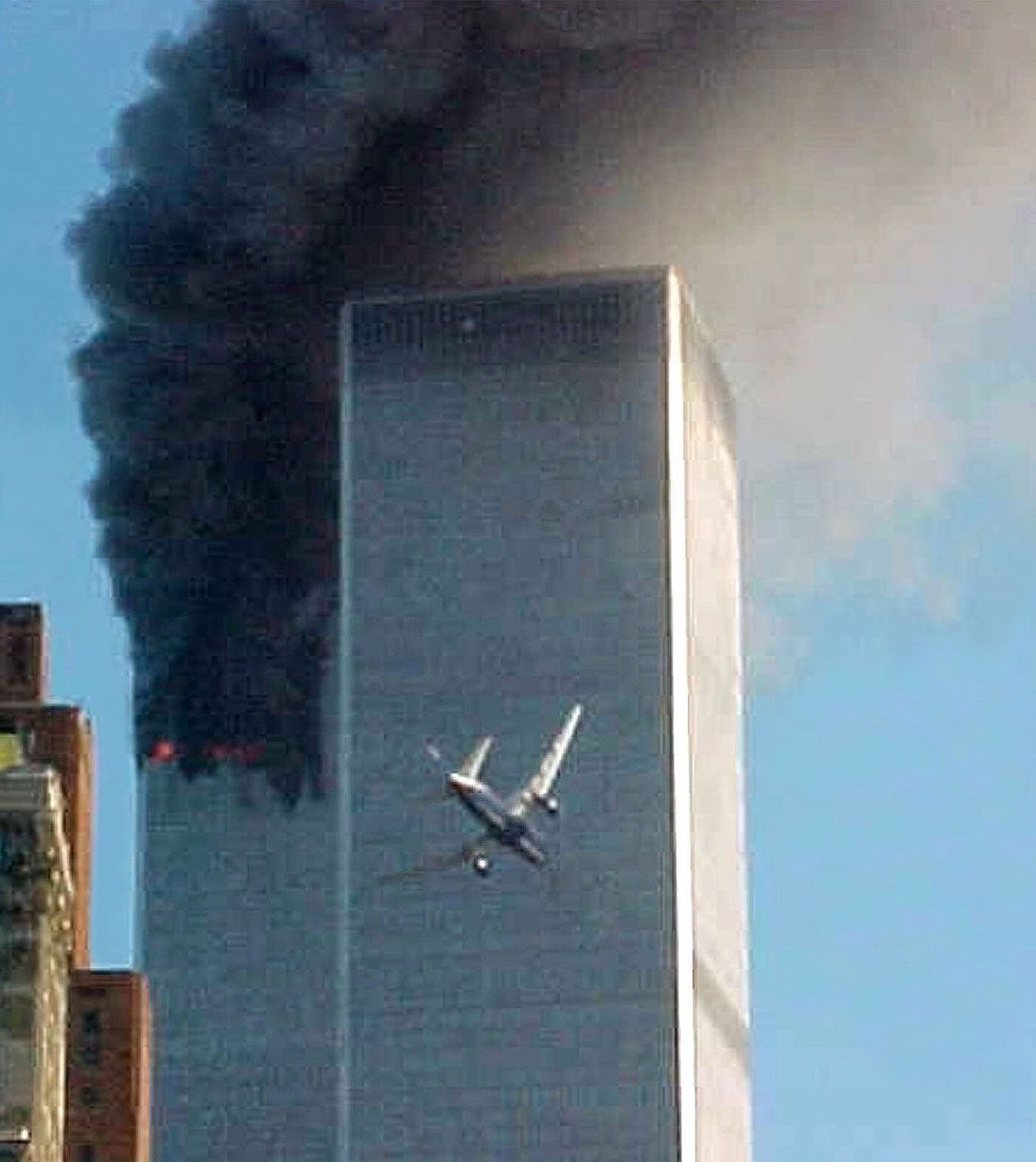
HAVING just seen Manhattan’s Twin Towers collapse in live broadcast, this column wrote: “This week’s towering infernos should etch 2001 in human memory as a watershed year on the scales of 1492, 1789, and 1939” (“A time to kill,” 14 September 2001).
Noting that the Third Millennium had just opened “with a totalitarian bang” the column argued that freedom, “the Cold War’s shining victor,” had been dealt a massive blow that demanded a massive counterattack. It followed, that “2001 can end up as the year in which the free world waged the ultimate war on tyranny.”
Having lived in this war’s trenches for the subsequent 25 years, Israelis now feel that some of this war has been won, some has been lost, and some – the most important part – has yet to be waged.
THE victorious part of the war that followed al-Qaeda’s attacks is visible in south Manhattan. The emergence of Freedom Tower where Ground Zero’s cavity once gaped, an inspiring work of iron, steel, and glass that every 9/11 shoots skywards twin pillars of bright light – is a looming testament to America’s resilience and its attackers’ defeat.
This dimension of victory is in the realm of psychology, but America won in other ways as well.
The terrorists hoped to shock American civilization, by pitting against each other two of its most iconic inventions: the skyscraper and the airplane. This hope was also dashed. American inventions, from the airplane, the skyscraper and the personal computer to the motion picture, the rock concert, and the fast-food restaurant remained civilization’s fixtures, to the jihadists’ chagrin.
Equally frustrated was the raid’s political quest. Targeting America’s commercial, military and political nervous centers was designed to debilitate its economy, army, and government. None of that happened.
On other fronts, however, victory has been elusive.
THE attack's first success was its inspiration of other jihadist massacres worldwide. Here is a very partial list:
The Bali bombings that killed 202 people in 2002, the Madrid train bombings that killed 193 in 2004, the London Underground attacks that killed 52 in 2005, the Mumbai train bombings that killed 209 in 2006, the Moscow train bombings that killed 40 in 2010, the shopping mall attack in Nairobi that killed 67 in 2013, the Ankara bombings that killed 109 in 2015, the Charlie Hebdo attacks that killed 137 the same year in Paris, the concert hall attack that killed 145 in Moscow in 2024, the New Orleans truck attack that killed 15 last year, and last December’s Bondi Beach shooting that killed 17 in Sydney, Australia.
Some would argue that the scope of these attacks and their diminishing frequency indicate a loss of momentum. That was arguable until Hamas’s October 7 attack. The jihadist energy, it proved, is alive and well.
Then there was the failure of what the American president of the day, George W. Bush, called The War on Terror.
FAILURE began with the choice of that war’s locations, a pair of entirely different theaters 1,500 kilometers apart: Iraq is a steaming flatland, Afghanistan is a continuum of snow-capped mountains. Politically, Afghanistan was a fundamentalist theocracy, while Iraq was a secular tyranny. Conquering and governing both countries simultaneously meant military and financial overstretch.
The reason to attack Afghanistan was that it had sheltered the terrorists and shared their jihadist agenda. The reason to attack Iraq was that its leader cheered the attack, and represented all that was politically ill about the Arab world that produced the September 11 attacks’ 19 perpetrators.
Taking Afghanistan was meant to eradicate jihadists. Attacking Iraq was meant to redesign the Arab world. Each of these aims was in itself a tall order, but put together they were too altogether unattainable, even for the US.
That all this ended with Iraq under Iranian influence and Afghanistan under Taliban rule is a major fiasco, that began immediately after September 11, with the very naming of the counterattack that Washington resolved to wage.
THE name “The War on Terror” fingered the enemy’s weapon instead of the enemy’s cause. In World War Two Americans were told, rightly, that they are fighting fascism, not the kamikaze suicide. During the Cold War, all Westerners understood that the enemy was not the Soviet Union’s atomic bomb, but communist faith. Now the enemy was jihadism, but world leaders, from America through Europe to China, would not say this.
Yes, 9/11 ignited an international intelligence effort to thwart jihadist attacks before they are waged, and to hound their plotters wherever they may nest. But that is not enough. Civilization has an enemy, one that deep in its soul and mind cannot accept pluralism, or even just diversity, and thus seeks to subdue all other faiths, by terrorizing millions worldwide.
Seen this way, the threat that was announced at the millennium’s outset is intact, and must be met with two global efforts, one military, the other political.
The military aim should be what is now Israel’s doctrine, namely, fight tooth and nail any jihadist militia that emerges on your borders. The political aim should be to tell mankind what jihadism has in store for it, and to expose the governments that help its plots.
For instance, a recent French government report, that the Muslim Brotherhood controls 139 French mosques, and that this is part of a broader Islamist effort, backed by Qatar and Turkey, to infiltrate Europe – should be trumpeted worldwide. (See “French report warns of Islamist 'entryism' as risk to national cohesion,” BBC.com, 21 May 2025)
That is not what’s happening. In fact, the current American president considers this pair of Islamist engines his allies, and their leaders his personal friends. Is this the victory that the September 11 terrorists had in mind? It isn't. It is, however, America’s defeat.
Jerusalem Post 18 September 2026