
Geopolitics
When Empires Meet
Seventy years on, the Sinai Campaign makes one long for the days when the superpowers could jointly defuse a conflict
By Amotz Asa-El
IT'S been largely forgotten, but a brief war that raged here 70 years ago this month now looms as an antithesis to the way today’s world is run.
The Sinai Campaign was a military landmark, despite its briefness, a mere eight days that ended with Israel’s conquest of the Sinai Desert, and Anglo-French forces’ seizure of the Suez Canal.
The IDF, though only eight-years-old, wielded multiple armored brigades and battalions of paratroopers alongside state-of-the-art fighter jets. As the war opened the IDF dropped from 16 airplanes 395 paratroopers 70 kilometers east of the canal, and another 200 north of the Sinai’s southernmost point, Sharm el-Sheilkh.
Hours earlier the Israeli air force downed an airplane that carried 16 senior Egyptian officers, thus stunning the Egyptian army before the fighting began. Two days later the air force won the Middle East’s first dogfight between supersonic jets.
On the ground, and much more crucially, the IDF conducted, for the first time in its history, armored battles, in which it deployed 300 modern tanks. Finally, at sea, the navy landed ground troops at the Sinai’s Mediterranean and Red Sea shores, while up north its sailors hit and captured an Egyptian gunboat that had sailed past Tel Aviv and began bombing Haifa.
Added up, these operations meant that the embryonic army of 1948 had matured, and was now a formidable military capable of large-scale maneuvering, long-distance deployment, and complex logistics. Euphoria swept Israel, as Prime Minister David Ben-Gurion hailed “the most glorious military operation in the history of our nation” which heralded "the Third Kingdom of Israel.”
Still, the war’s non-military aspects were far more meaningful, particularly when compared with what is happening today.
THE Sinai Campaign was launched by a British-French-Israeli alliance forged in a secret conference in a villa outside Paris five days before the war.
The French and British had owned the Suez Canal until Egyptian leader Gamal Abd el Nasser nationalized it, in July 1956. The Egyptian move, besides legally constituting a casus belli, challenged the pair’s status as international powers. London and Paris thus resolved to forcibly restore their grip of the canal.
Jerusalem shared the quest for free navigation – Egypt now blocked Israeli vessels’ access to the canal as well as to the Gulf of Eilat – but Israel had the additional aim of ending terror attacks from Egyptian territory into the Jewish state.
The military plan, which left the desert for Israel and the canal for its allies – worked. The Egyptian army was routed by the IDF, the Egyptian air force was disabled by the Europeans, and the canal was retaken by its prewar owners. Diplomatically, however, the war’s European engineers shot themselves in the foot.
The imperial status that Britian and France set out to preserve, was actually lost. The new powers, the US and USSR, were both outraged by what they saw as the declining powers’ audacity, so much so that they set aside their mutual hostility and jointly forced London and Paris to retreat, and leave the canal in Nasser’s hands.
Israel’s treatment was even harsher: from Moscow, an ultimatum warning that Israel’s actions “threaten its existence,” and from Washington, a warning that if Israel fails to retreat the US would not defend it from a prospective Soviet attack.
Ever realistic, Ben-Gurion understood full well what this double whammy meant. And so, in a dramatic radio address, the prime minister said Israel will retreat.
Some were appalled. The leader of the opposition, Menachem Begin, who had backed enthusiastically the decision to wage the war, decried the decision to retreat. “Jerusalem’s fate will be decided in Gaza,” he said.
That the same Begin would later stage his own retreat from Sinai is ironic, but beside the point. What matters, from today’s vantage point, is that Ben-Gurion’s leadership was so effective that he could take such a fateful decision quickly, execute it swiftly, and pay no political price.
Added up, the combination of strategic daring, diplomatic pragmatism, and political control he displayed before and after that war are what Israel today so glaringly lacks, and so sorely needs.
Then again, with all due respect to its narrow Israeli meaning, the war’s global dimension was even more meaningful, especially when compared with today’s events.
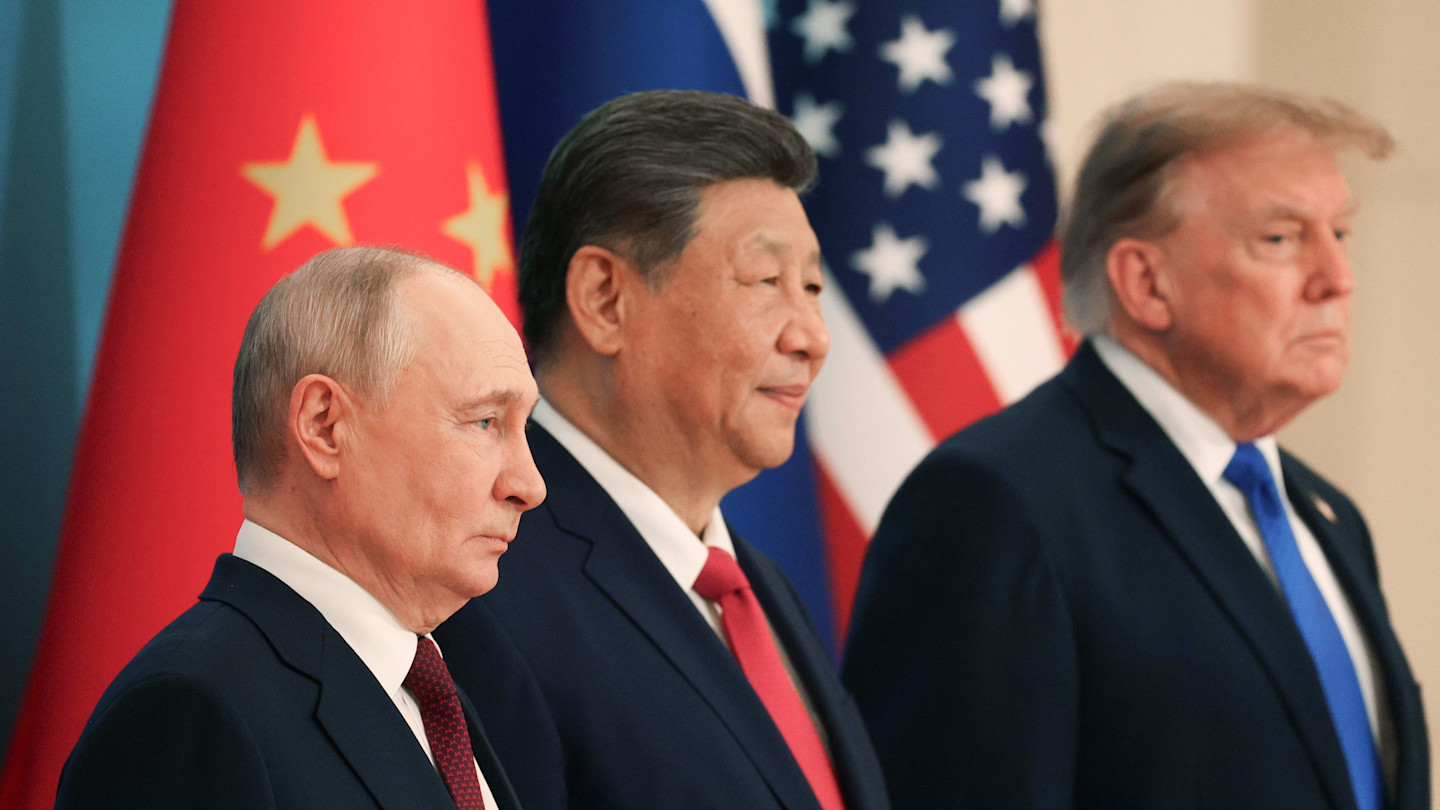
THIS column is being written hours before the leaders of China, Russia and the US hold these three superpowers’ first-ever three-way summit.
Hopefully, God too will be there and inspire the three to produce a gospel; an announcement, say, of a ceasefire in Ukraine, or a deal on Iran, or a formula for Taiwan. Chances of anything like this actually happening are low at best. Unlike the superpowers of 1956, they seem incapable of any harmony.
Yes, they were no messiahs. Then as now, espionage in both directions thrived, and so did cruelty and hypocrisy. While Israel and Egypt fought in the Sinai the Soviet Union massacred freedom fighters in Hungary while America ignored the rebels' pleas for help.
Still, in the face of the Suez showdown the new superpowers imposed themselves on the old ones, and forced an arrangement that defused the crisis. All three armies retreated, maritime traffic was restored, a peacekeeping force was planted, and the Middle East got more than a decade of quiet.
It wasn’t much, but today’s superpowers can’t even do that.
The leaders of 1956 believed in something – Nikita Khrushchev in communism and Dwight Eisenhower in democracy. Their successors believe in nothing. Nothing, that is, except gloveless autocracy and imperial sway; the same sway that made older superpowers dig the Suez Canal and use it as an imperial lynchpin, until new superpowers reminded them that superpowers will repeatedly emerge, mature, and prey, but like the fiercest of lions, will ultimately die.
Jerusalem Post 20 November 2026